

Biggest online money making red flag: “trading crypto”
Crypto trading is bad for humans.
I consider this to be true in both the case of individuals (especially), and more generally harmful societally (to a lesser extent). On top of that, gambling is harmful psychologically and spiritually, but let’s focus on the more practical aspects of why I think crypto trading is a bad idea. Usually, people marketing “getting rich in crypto” have their own best interest – at the expense of yours – at heart.
The profession of trade creates real-world value by facilitating and accelerating the exchange of real goods between real people. Crypto trading doesn’t create true value, because at it’s essence it is not about exchange of useful goods. In reality, it is just degenerate gambling.
Trade as a profession is a basic building block of civilization. Trade and civilization are inseparable. Real trade uplifts, strengthens and deservedly enriches the individuals engaged in it, and through them the societies they live in. Crypto trading, a grotesque fiat parody of real trade, does the very opposite.
Trading crypto in the degenerate online fiat casinos serves to impoverish, humiliate and weaken the vast majority of participants. They take their hard-earned wealth into these snakepits of fraud and deception, and with dreams of getting rich quick, lose their savings to the immoral and unethical people running the show.
In a casino, the house wins – not always, as they need to keep all the little fishies on the hook. The let you win just enough that you keep bringing them the money, so they can fleece you over time with mathematical precision and certainty.
It is actually unfair to compare the crypto exchange industry to the casino industry, as there are a few key differences.
The differences between casinos and crypto exchanges
A real casino is open about what it is: a place for gambling. They are unapologetic and frank about what their business is. Like a brothel doesn’t pretend to be a spiritual healing center, a casino doesn’t pretend to be a place of value creation.
I often hear crypto traders lie to themselves that their activities create value through price discovery. I consider that – at best – to be perhaps partially true in a technical and superficial sense. When considered more deeply, the whole argument breaks down. The people who think that crypto casinos create value (beyond enriching the owners and insiders), must also be susceptible to thinking that the stripper likes them.
You go to a casino to play games, and everyone knows the nature of those games: basically you buy the feeling of excitement, and nobody pretends that the games wouldn’t be balanced to ultimately benefit the house. It is understood and accepted by all participants, and while the deeper morality of these businesses can be called into question, they don’t have to pretend to be something they’re not. In that sense they can legitimately be called honest businesses.
That is NOT the case with crypto exchanges. They suffer from the same moral ambiguity as the casino industry, but the reality is much darker. The game in them is not just rigged, it is actively being played against the participants who are presented with a false sense of the game being fair.
The game in the crypto exchanges has never been fair. If they were actual casinos (let alone stock exchanges!), the way they’re playing the game would be highly illegal.
The analogy of a poker game might be useful here. Poker as a game is actually an exception in the world of (other) casino games, because the house usually doesn’t participate, and skill plays perhaps even a higher role than luck – at least among the more advanced players.
A crypto exchange is like a facilitator for a poker game (like a casino would be), but it is not just a neutral platform for a game played amongst participants on equal footing. The crypto exchange is very much a player in the game, but as it provides the venue, it has hidden cameras that allows it to see, in real time, all the cards of all the other players!
You could argue that the exchanges still have an incentive to play nice because otherwise the players would go to other venues, but this would be incredibly naive. As the technology inherently allows for these “hidden cameras” (the exchange engine HAS to see all the trades and positions to function properly), and the chance of any legal repercussions is effectively zero, AND the financial reward is gigantic, do you really think the exchanges wouldn’t take advantage of the situation?
Even still, about 15 years into the existence of these crypto casinos, they suffer from mystical “outages” whenever there are high trading volumes. Of course, they claim it is because of technical load to the servers, but then again the traders usually find out that coming out of these mysterious outages, there has been an equally mysterious price swing that settled their trade against them. Mysteries on top of mysteries!
You might think that such shenanigans are illegal, but the reality is that the more regulated the casino, the worse off they seem with these outages and other scammy behavior. It’s almost like thinking that government health care was a source of health. There is no substitute for personal responsibility, and trying to outsource that to government only makes things worse through the false sense of security.
If you want to gamble, I suggest you try to become a poker professional instead of trading crypto. At least with poker, skill does play a real role, and if you’re smart enough about risk management, you might stand a chance. With the exchanges, the game is so heavily rigged that your chances are extremely slim.
Some people in crypto do make reliable profits…
This doesn’t mean that some people wouldn’t be making money reliably with crypto trading.
- The exchange owners – we already covered this.
- Market makers: especially ones dealing with coins where the supply is either unknown (not verifiable) or verifiable but heavily concentrated to the “main player”. I’ll let you do your own homework on which coins might be like that. These market makers can manipulate the market to their hearts content because they control the majority of the supply, and they are professional at what they do. They decide (with mathematical certainty!) the direction the markets take, and you’re just in for the ride, resorting to vague guesswork. You’ll have to do your own probability math on how that ends.
- People who create the coins (not much work), and who generate the marketing fluff around the projects (this, along with running the insider groups, is the most work). When you encounter advocates of making money in crypto, they are most likely in the business of getting paid by these people, just one degree removed. The real creators of the coins are usually anonymous, if they’re smart. In recent years, a lot of the non-anonymous people have either gone to jail for running what are clear ponzi schemes and pyramid scams, are on the run from the law.
Even those crypto project launchers who don’t go to jail don’t exactly lead enviable lives. I’ve followed a lot of the known scammers over the years, and one thing seems to be common with them all: karma is a bitch. They have a tendency to waste as much of their ill-gotten gains as fast as they can, buying stuff that will never make them happy, only to then end up dead quite young. There seem to be no exceptions, as they all know they haven’t really earned any of that money. While many of them are psychopaths and probably don’t “care” on an emotional level, they still know what they’ve done. It is impossible to escape the knowledge of having run a scam, and it is a heavy burden to bear.
If there is an exception, his name might be Vitalik Buterin. I’m uncertain of how much Vitalik was “in” on the darker side of Ethereum (he may have been, at least partially, played by people more cunning than him). He may or may not have had honest intentions about the 70% pre-mine and the role of the Ethereum Foundation, or had full knowledge (or understanding of the meaning of) of the Chinese Communist Party backing of the project. Even if he was just played as a fool and had pure intentions himself, I wouldn’t wish to be in his shoes currently. You don’t have infinite chances of changing the story of what Ethereum is supposed to be. The narratives have run out, and I almost feel sorry for Vitalik. Almost.
…and it can’t be said that 100% of them are scammers
There is also a fourth group, one that is distinct from the previous three, as those three groups can make money with a fair degree of certainty. There are some master traders who can make money, not through certainty, but through probability.
Even if the game is rigged against you, no matter how heavily, with really professional risk management, and extreme self-control, it might be possible to eke out a somewhat reliable profit even from the most corrupt crypto exchanges. I think I know some people who are able to do this, but I haven’t seen their balance sheets so I can’t be certain.
I almost don’t feel like mentioning this group as there are other people out there with… let’s say more hope than common sense. Even talking about people who may be successful might encourage some others to ask “well if there are people who can do it, why can’t I?“.
Well.
I don’t want to put anyone down, but really the vast majority of the people who think this way, get their asses handed to them and they end up losing their money. It just happens almost automatically, and I’ve seen it happen even for very smart people. For it NOT to happen, you need to be almost superhuman in your ability to control your emotions, and you better be damn smart about your risk management skills. This is something that the very, very vast majority is DEFINITELY NOT equipped to do, and to a large extent these skills require characteristics you’re born with – and most people just are not.
Crypto is void of true value and growth
When I was in my “figuring out what to do online” phase, I did briefly consider becoming a trader. I’m not sure whether I have those beforementioned innate qualities, but I am good with numbers & probabilities, and pretty good at controlling my emotions, so maybe I could have learned to become robotic enough to make it. Then again, maybe not.
The reason why I ultimately decided to do something real instead of trading useless bits for other useless bits, was that I wanted to do something that would build skills that would be useful regardless of whether some specific business succeeded or not.
I knew that trading would only teach me trading, and while you could argue that some of those skills might translate into some useful other activities, I don’t feel that those arguments are solid. I wanted to do something that would clearly and directly help me build my character and skills, and I felt that trading would quite likely have the opposite effect.
In hindsight, I’m so very glad I made that choice.
Also, you can read this short fictional piece I wrote:
Appendix C: A day in the life of a crypto trader
My initial vague idea for that piece was that it was supposed to be just a funny story about a guy who thinks that the stripper likes him, lol. Then the story sort of started to write itself. Not far into it, I started to really feel sorry for this guy, even though I was literally just making him up on the fly.
I based him on things I’ve seen here and there over my years in bitcoin. Even though I try to not pay attention to the world of “crypto” (as opposed to bitcoin), unfortunately it is bitcoin-adjacent as these crypto scams leech off of the story of bitcoin. “I like bitcoin, buy my shitcoin” goes the ever recurring theme of the scammers.
There seems to be no end to this, as there is no end to people with limited understanding of these scams. Year after year, new victims keep on showing up with their dreams of getting rich overnight.
If you get into the “crypto” world, you’re going to become one of two things. Either you’ll end up somewhere along the lines of the guy in that story, or you’re going to be someone who takes advantage of people like him – knowingly or unknowingly, doesn’t matter. I don’t see a third option in the zero-sum world of crypto trading.
If it’s not yet clear to you why bitcoin is different, the short answer is that bitcoin solves Fiatello’s problem. “Crypto” makes it worse. Absolute scarcity can only be discovered once. Replicating it is impossible by definition. Yet, that’s literally what these crypto scams are trying to do, again and again, fooling yet another wave of newcomers each time.
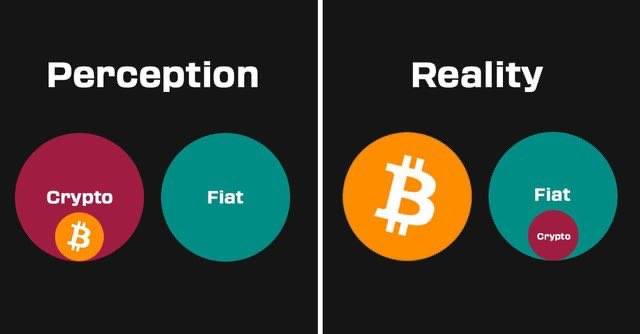
The #1 job of the crypto scammers: trying to muddy up this extremely important perspective!
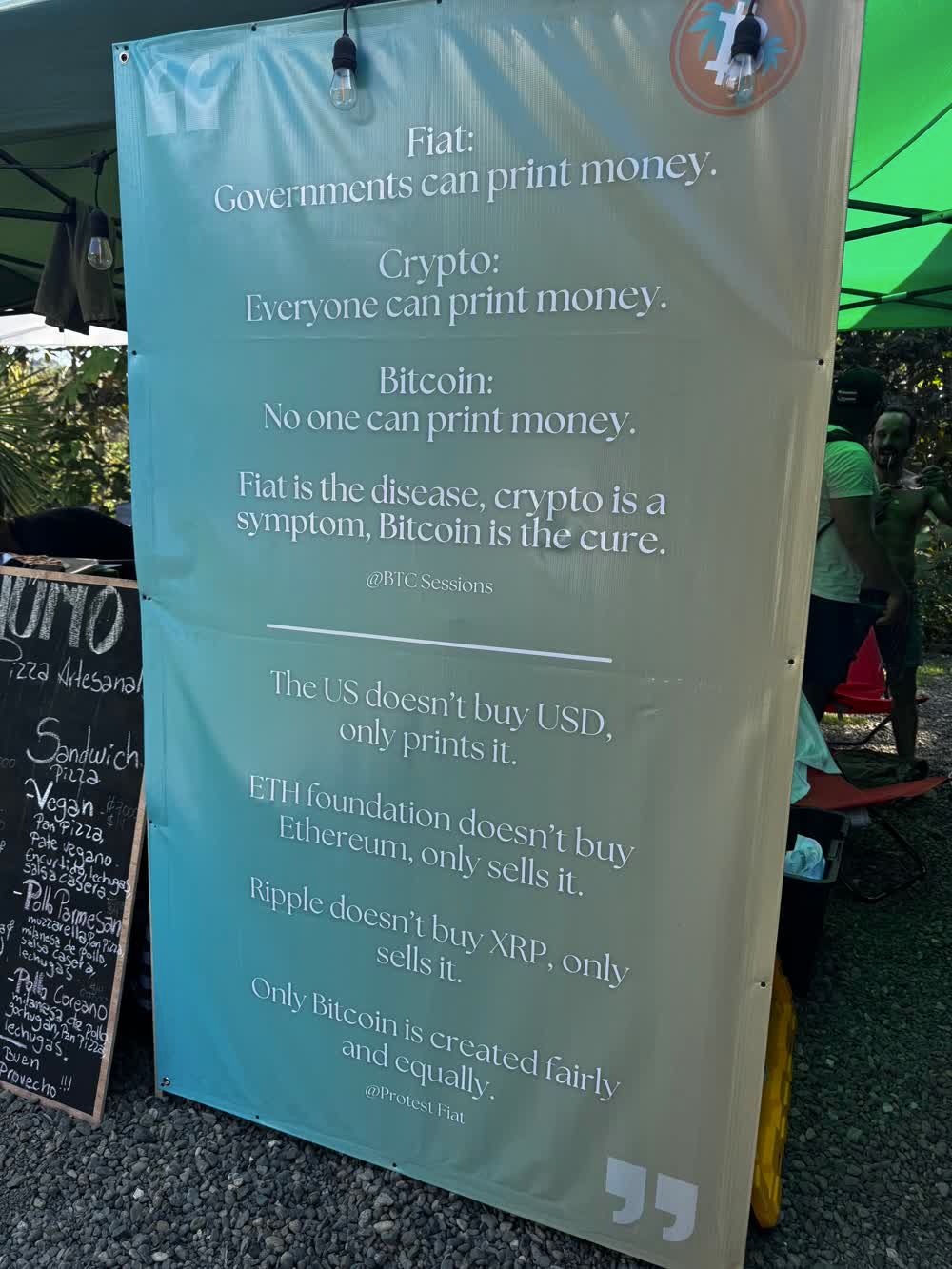
Scarcity in money, abundance in everything else. Abundance in money, scarcity in everything else. There is no way around this simple paradigm, and any new “crypto” project, no matter how well-meaning (at this point they are NOT well-meaning!) adds to the abundance of money.
I cry inside whenever the newcomers have to experience the “scarcity in everything else” part for themselves, but maybe they just have to learn by mistake. If I can save just one person from having to learn these things through pain, writing this has been worth it.
About all the other bad ideas
I’m sure there is an infinite list of bad money making ideas, but I don’t have any specific knowledge about those beyond what I wrote in these two chapters. If your business idea has at least some chance of creating value, the end result depends much more on the execution, rather than the “quality” of the idea (which is often impossible to judge before you actually test it in the real world).
Even very mediocre ideas can become great businesses if executed well, and you can always pivot, so don’t be too critical about ideas (and never pay for a business idea – they are always worth zero, because execution is everything!). It is what you do with that idea that counts, and analysis paralysis kills too many early phase entrepreneurs. Rather than doing “exactly the right thing” (which either isn’t a real thing or can be only identified after it’s been built), it is better to just do something with a somewhat directionally correct idea. Often businesses start out as one thing, and soon change into something adjacent or even something completely different.
Don’t be afraid to try and fail, and just get started!