

The untrustworthiness of banks is not because they are evil
If there’s one thing I’ve learned on my journey about banking, it is this:
DO NOT TRUST BANKS.
Another important thing I’ve learned is this:
The banks are not evil!
If you’ve only lived in your home country your whole life, maybe you’ve only caught a sniff of the problems I describe below. You may have noticed or heard stories of banks freezing certain transfers with descriptions in them they don’t like, or being increasingly difficult with cash, or some other fairly minor problems.
When you go location independent, you need to be prepared for those issues to get to a whole other level, but the good news is that there are always ways to deal with the banks. You just need to know how, and I try to open my understanding of the fundamentals of this ever-changing situation so you’re equipped to fight this fight – because fight you must, unfortunately…
The reason why you can’t trust banks is that while they are, generally, private businesses that would like to serve their customers well, they’re stuck between the rock and the hard place. The rock is the supra-national bureaucracy, and the hard place is the government regulator, so the banks are stuck with the government telling them that they must. stop. crime. or. else (yes, in that kind of a robotic, definitely not human voice).
When the banker, understandably, expresses frustration at this quite unclear instruction and says that they would need help from the police to prevent crime, the government regulator is not amused. To them, the banks can obviously prevent all crime, and the regulator doesn’t have to listen to any whining from those uppity bankers.
If preventing crime means heavy-handedly denying service to 99 honest customers to prevent one criminal customer, then that’s not really a problem of the regulator! If the bank would even consider siding with those 99 honest customers, well, it would certainly be a shame if something happened to that banking license that cost tens of millions & years of work to get…
If this sounds like an exaggeration to you, it is only exaggerated slightly to illustrate the point. The problem is very real, and you will run into it sooner or later! I’ve been trying to deal with all kinds of different banks in multiple different countries for 10 years now, and while you definitely can work with banks as a private person, it is a constant uphill battle. It’s a battle you can never win, only keep fighting so you get to make your transfers and to keep your accounts open.
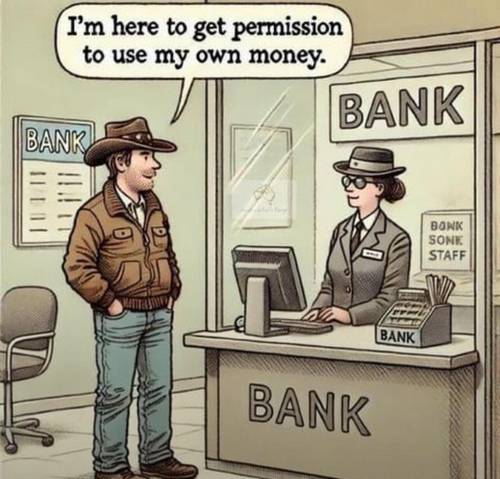
Just a short time ago, my girlfriend’s business bank account on Wise (Fintech provider) was threatened to be closed. This was a typical case: she did nothing wrong, neither was any wrongdoing even implied. This threat was almost certainly prompted by a faceless government regulator behind Wise, telling Wise that they now have to change the rules. From now on, Wise demands not just the standard proof of address (which could be a just registered agent – affordable and effective), but proof of a physical office for the business: if your business didn’t have some kind of official physical location, you were thrown out. No negotiation, just a new requirement to comply with (rent a real physical office one way or the other) or get your account closed.
I don’t know the reasons behind this heavy-handed rule change (nor even for certain if it was the regulator, but I can put 2+2 together), as the banks are strictly forbidden to make any comments on why these changes are made. That, by the way, is a sure sign that it is the government regulator pulling the strings, not the bankers being evil.
The problems are not caused by the banks
The banks, as private businesses, would have strong incentives to:
- Not behave in this way in the first place.
- At least try to minimize the reputational damage by offering a basic level of customer service to the customers and clearly communicating the reasons behind the change – unless it would have been an actual criminal case, which it wasn’t (this rule was changed for everyone).
- Try to offer some advice on how to comply for those who find this new rule challenging.
None of the above is happening, and none of it surprises me. This is an ever-recurring theme: the regulator crushes legitimate customers by silently attacking from the shadows, and prevents the banks from doing normal customer communication. It does so in the name of its ever more desperate attempt to “do something, anything” to try to “solve” problems that the banks are not equipped to fight any more than they already do. That doesn’t prevent the regulator from tightening the screw ever tighter. That then translates into these ever-changing rules, and subsequent closing of the accounts of honest customers.
This case was quite typical, and is by no means an example of the worst aspects of this game of imaginary cat-and-mouse that the regulator plays with honest people. When you’re really a victim of their hammer, you’ll just get your account frozen for an unknown amount of time, for an unknown reason, and with unknown ways to do anything about it.
A well-known example of this has been Paypal. While the consumer customers of Paypal have mostly been spared from these problems, the merchants haven’t. When I was doing eCommerce, Paypal freezing merchant accounts for no apparent reason for long periods of time felt like an everyday occurrence – I heard these stories ad nauseam. People doing high-ticket dropshipping were potentially bankrupted by this, as they were running businesses usually at around 10% net profit margin, but often having to hold almost 100% of the revenue, to later pay the supplier a majority of that money for the goods that the customer ordered.
These account freezings tended to happen just when these businesses were taking off: Paypal noticed a sudden increase in transfers -> red flag -> freeze account -> bureaucratic nightmare. Imagine the horror of being legally liable to pay out tens or even hundreds of thousands of money that was never yours, and that you now no longer have access to!